
Event marketing budgets are under more scrutiny than ever. Whether you are planning a product launch, sponsoring a festival, or activating at a trade show, the signage format you choose has a direct impact on footfall, brand recall, and return on investment. The debate between giant inflatables and traditional event signage is one that marketing managers, event organisers, and brand teams are increasingly having, and the answer is not always as obvious as it seems.
This giant inflatables vs traditional event signage comparison breaks down how custom giant inflatables stack up against conventional options like vinyl banners, printed boards, pop-up stands, and gantries across five critical factors: visibility, setup time, reusability, cost per impression, and audience engagement.
What Counts as Traditional Event Signage?
Traditional event signage covers a broad category of static, printed, or semi-permanent visual marketing assets. The most common formats used at UK events include:
- Vinyl banners and mesh banners fixed to fences, scaffolding, or frames
- Printed boards and foam PVC panels used as backdrop walls or wayfinding signs
- Pop-up display stands and roller banners are typically seen at trade shows and conferences
- Gantries and truss structures used at sporting events and race finish lines
- A-frames and feather flags placed at ground level for directional or promotional messaging
These formats have been the backbone of event branding for decades. They are familiar, widely available, and relatively simple to produce. But familiarity does not always equal effectiveness, particularly in high-competition outdoor environments where dozens of brands are fighting for attention simultaneously.
Inflatable Advertising vs Banners: How Does Visibility Compare?
Visibility is the single most important metric for any piece of event signage. If your target audience cannot see your branding from a meaningful distance, the investment is wasted.
Standard vinyl banners are two-dimensional and typically mounted at or below eye level. At a crowded outdoor event, they are easily obscured by crowds, vehicles, other structures, and competing signage.
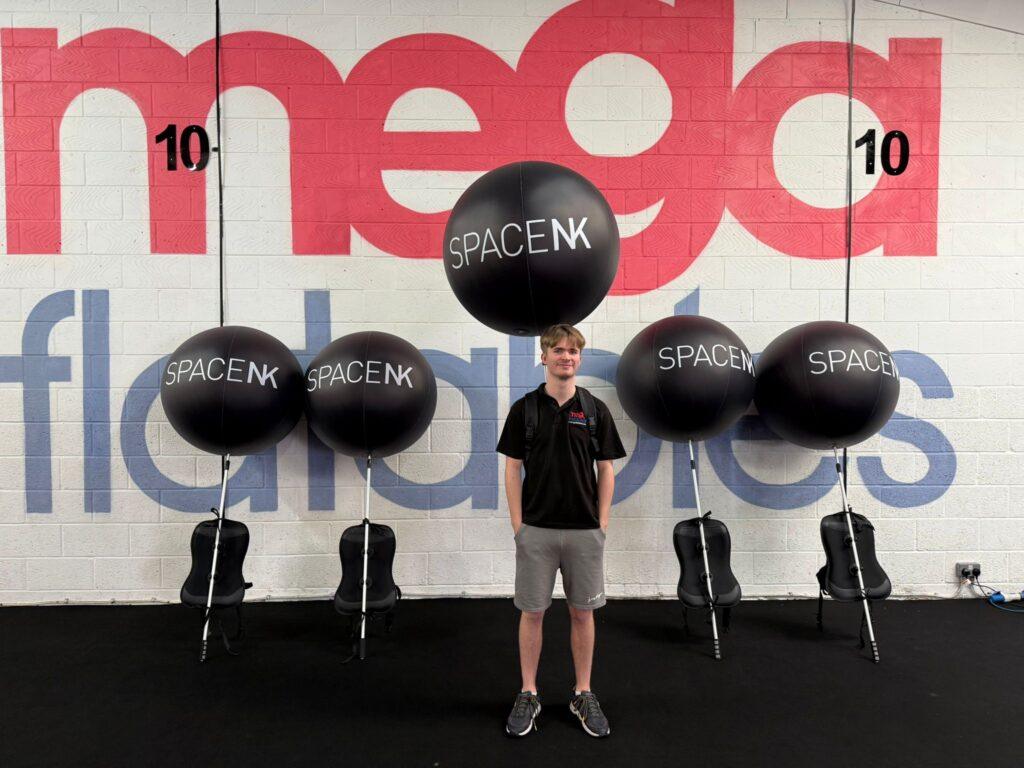
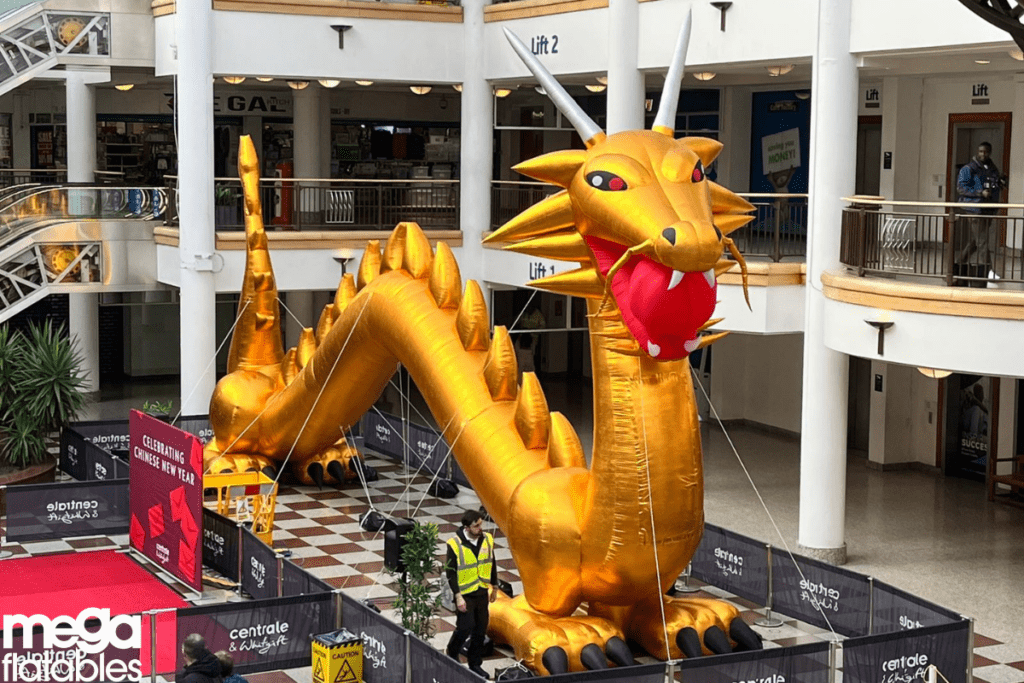
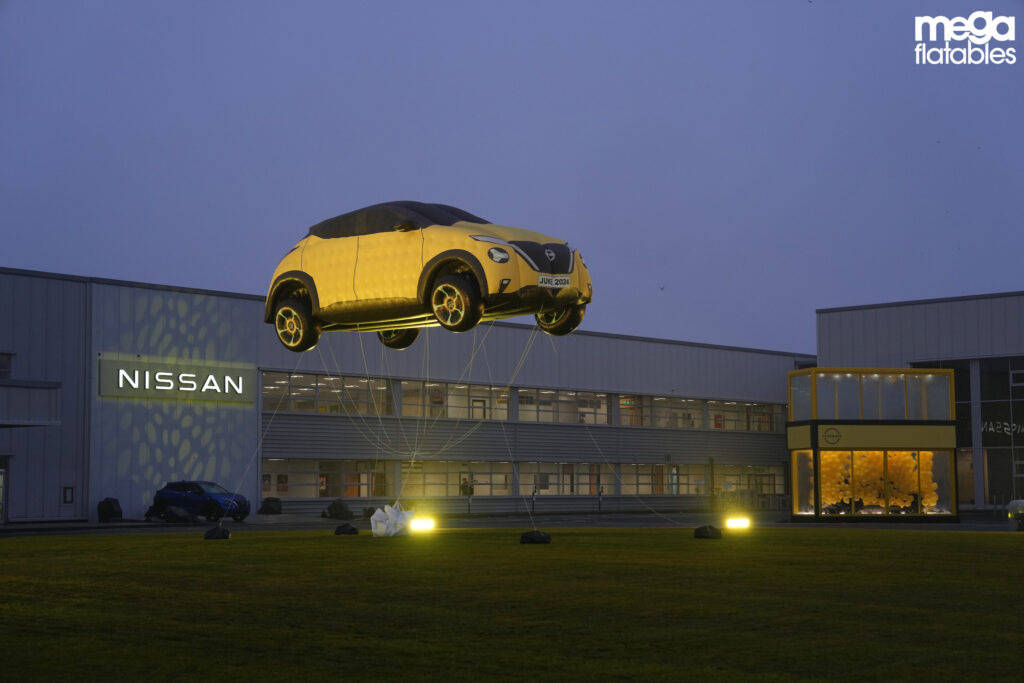
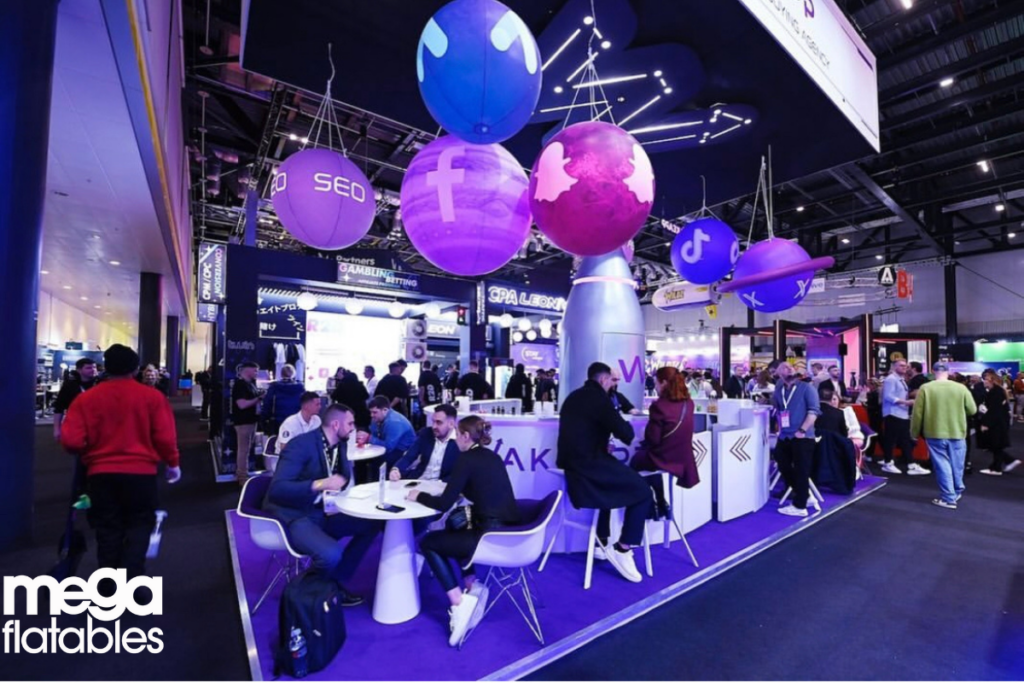
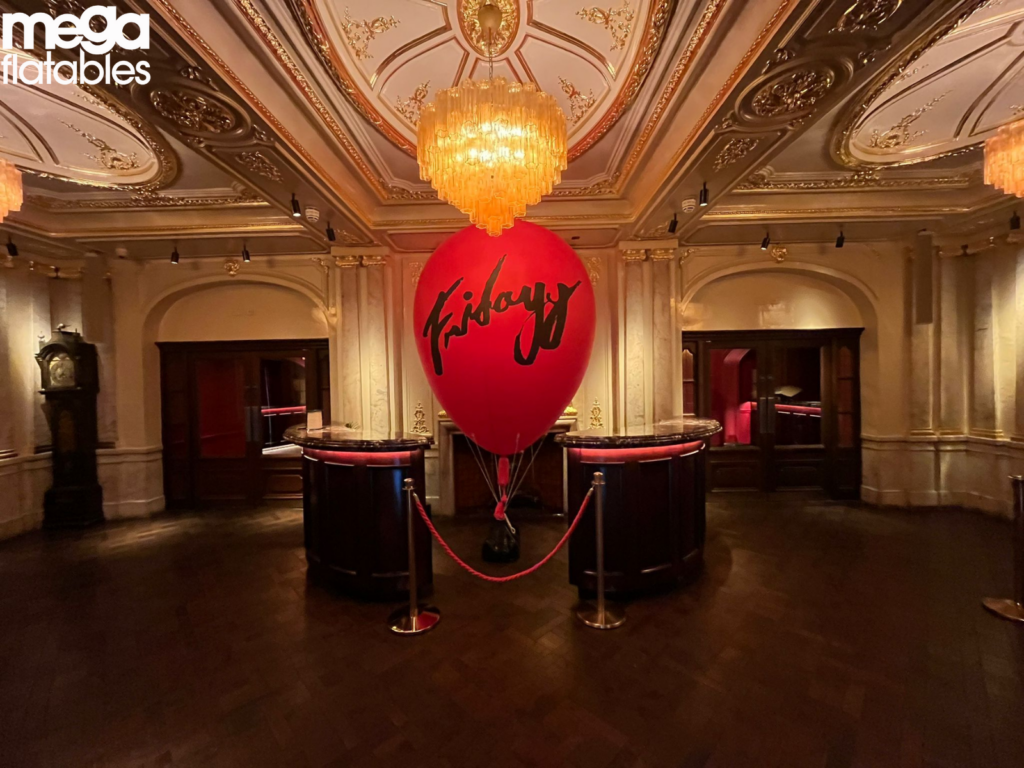
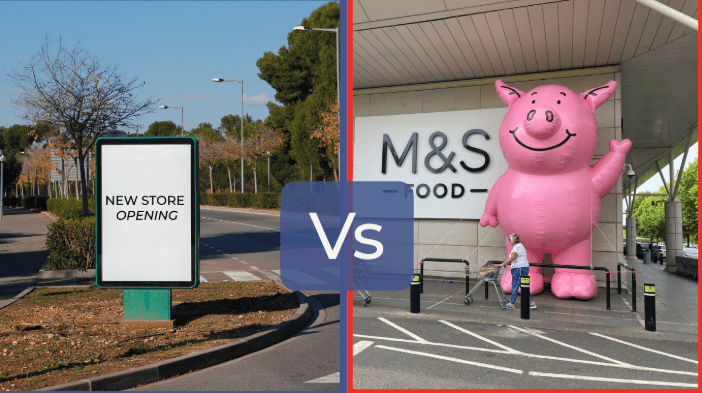
Giant inflatables operate on a completely different scale. Three-dimensional outdoor advertising inflatables create a landmark effect, helping attendees orient themselves around the event space and making your brand the reference point they describe to others.
Consider a real-world scenario: a drink brand activating at a UK summer festival. A row of branded banners along a barrier will compete with every other sponsor doing the same thing. A 5-metre inflatable version of the product, positioned near the main stage or food village, becomes a meeting point, a photo backdrop, and a conversation starter all at once.
Does Height and Scale Really Make a Difference?
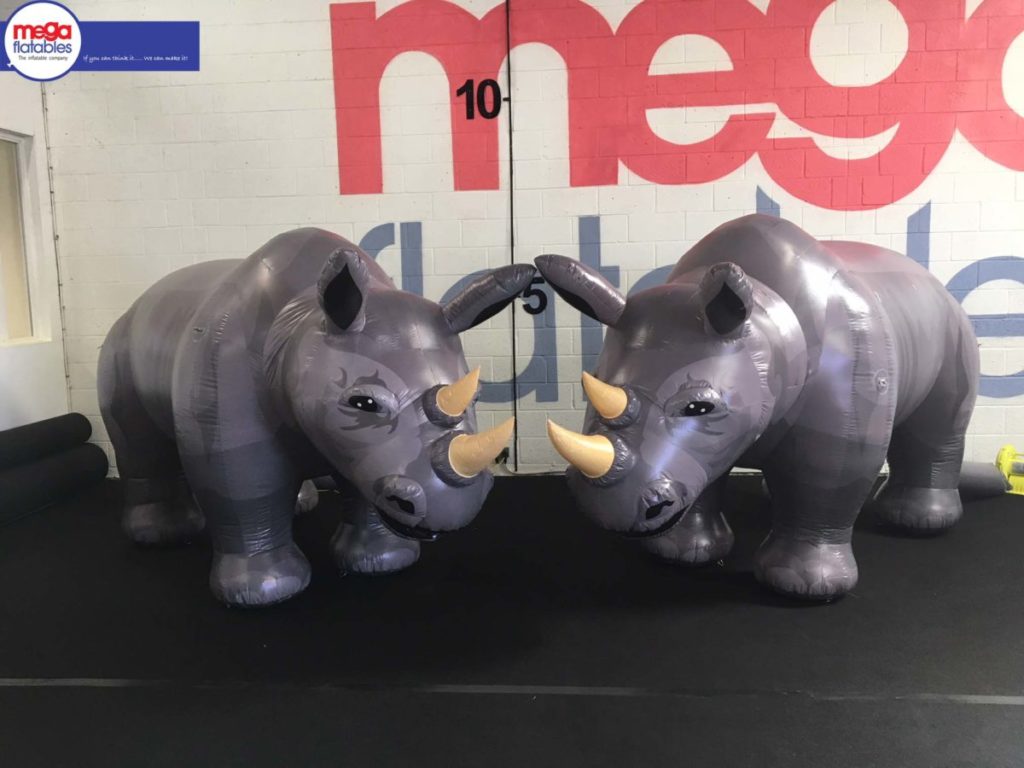
Visual attention is naturally drawn to objects that break the expected pattern of an environment. A flat banner hanging from a fence follows the expected visual pattern of an event. A 4-metre inflatable character standing next to the entrance does not. That disruption is what creates recall.
At Megaflatables, we have produced inflatables for brands including Google, Nike, Coca-Cola, and Disney, all of whom understand that physical scale translates directly into brand presence. When your signage can be seen from the car park, you have already started the customer journey before the attendee reaches the gate.
Setup Time and Logistics: Inflatable vs Static Signage
For event managers working to tight build schedules, setup time is a critical consideration. Traditional signage formats vary widely in their logistical demands:
- Vinyl banners require fixing points, cable ties or bungee cords, and often a cherry picker or ladder for elevated positions. A full banner wrap around a venue perimeter can take a team several hours.
- Printed board systems need assembly frames or mounting hardware and are vulnerable to wind without weighted bases.
- Gantries and truss structures often require specialist rigging teams, structural assessments, and can take half a day or more to erect safely.
Giant inflatables, by contrast, are typically inflated using a single electric blower and can be fully deployed in under 30 minutes. Most inflatable advertising products arrive in a single carry bag, plug in, and self-inflate. No specialist rigging crew. No scaffolding. No drilling into venue surfaces. For multi-site activations where a brand needs to set up and break down across several locations in a single week, this speed advantage compounds significantly.
Megaflatables also offers full event management services, including nationwide multi-site installation, meaning we handle the logistics from transport to setup to takedown. For brands running regional tours or multi-venue campaigns, this removes a major operational headache.
Reusability and Lifespan: Which Format Lasts Longer?
A standard vinyl banner used outdoors at multiple events will typically show visible wear after three to five uses. UV exposure fades colours, wind causes fraying at the edges, and repeated folding creates permanent crease marks that make the branding look tired. Printed boards are even more fragile, prone to denting, water damage, and scuffing during transport.
Giant inflatables are generally manufactured from reinforced PVC or ripstop nylon and are designed to withstand repeated use across dozens of events. A well-maintained inflatable can last for years, maintaining its shape, colour vibrancy, and structural integrity through rain, wind, and the general rigours of UK event season weather. The materials are also UV-resistant and waterproof, which means they retain their branded appearance far longer than printed flat signage.
This reusability factor transforms the cost calculation. While the upfront investment in a bespoke inflatable is higher than a single banner print run, the per-event cost drops with every deployment. For brands that attend 10, 20, or 50 events per year, the economics shift heavily in favour of inflatables.
Cost Per Impression: Event Marketing Inflatables vs Traditional Formats
Cost per impression (CPI) is the metric that separates smart marketing spend from vanity spend. It accounts not just for production cost but for how many people actually see and remember your branding.
Traditional banners have a low production cost but also generate relatively low impression counts per unit. A 3-metre banner at eye level at an event with 10,000 attendees might be noticed by a fraction of the crowd, particularly if it is competing with dozens of similar banners from other sponsors.
Giant inflatables generate disproportionately deep impression counts relative to their cost. Their visibility from a distance means they reach attendees who may never walk past a banner placement. Their novelty encourages social media sharing, which extends reach beyond the physical event.
According to EventTrack research, 98% of consumers create digital or social content at events, and 100% of those who do share that content with others. Three-dimensional, visually striking brand activations are far more likely to be captured and shared than flat printed signage. This organic social amplification means the true CPI of an inflatable can be a fraction of what the initial production figure might suggest.
What About Hire Options for One-Off Events?
For brands or organisations that only need event signage for a single occasion, hiring an inflatable rather than purchasing one outright can be a practical option. Megaflatables offers a range of inflatables for hire, including arches, blimps, and branded structures. This gives smaller businesses or charities access to the visibility benefits of inflatable advertising without the full purchase commitment, keeping cost per impression low even for one-off deployments.
Audience Engagement: Why Inflatables Outperform Static Signage
Static signage informs. Inflatables engage. This distinction matters enormously in experiential marketing, where the goal is to create memorable brand interactions rather than simply broadcast a logo.
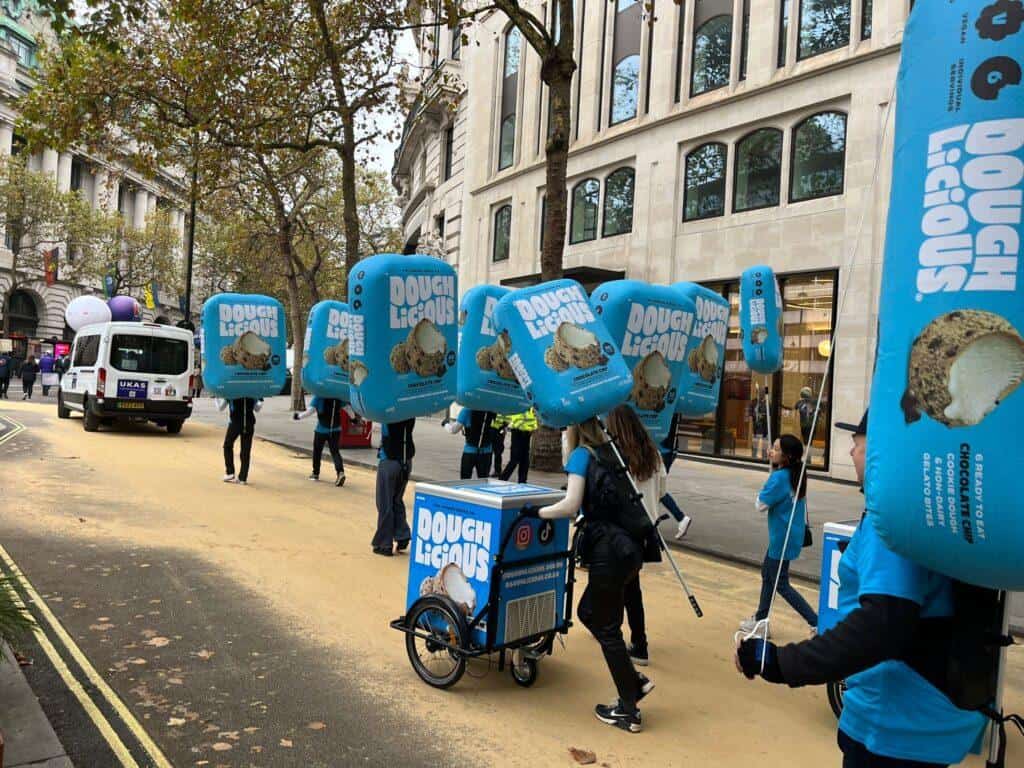
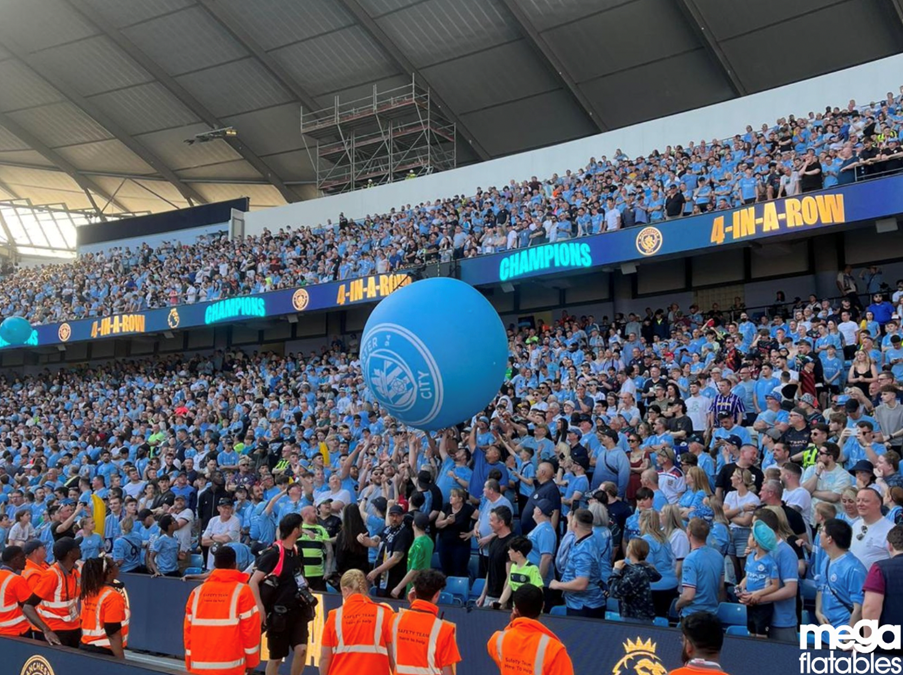
A printed banner is a passive communication tool. It delivers a message to anyone who happens to look at it, but it does not invite interaction. Giant inflatables, by their nature, provoke curiosity. People walk towards them. They photograph them. They touch them. They use them as meeting points and landmarks. Children point at them. Adults share them on social media.
This engagement is measurable. Brands using experiential marketing activations at events report significantly higher dwell times and deeper brand interactions compared to static signage. The Event Marketing Institute found that 74% of consumers say engaging with branded event marketing experiences makes them more likely to buy the promoted products.
For sports events, inflatable arches at start and finish lines create the defining image of the event itself. Every photograph of runners crossing the line features the sponsor branding. Every drone shot shared on social media captures the arch. This level of integration is impossible with a banner tied to a barrier.
When Does Traditional Signage Still Make Sense?
This is not a binary choice, and it would be misleading to suggest that traditional signage has no place in event marketing. There are specific scenarios where banners and printed boards remain the right solution:
- Indoor wayfinding where ceiling height is limited and directional signage is needed at close range
- Regulatory or safety signage that must meet specific formatting requirements
- Perimeter branding where event regulations mandate flat signage along barriers (common in broadcast sports)
- Extremely tight budgets where the objective is basic brand presence rather than standout visibility
The most effective event marketing strategies combine both formats. Use traditional signage for functional, close-range communication and giant inflatables for high-impact, long-range brand presence and audience engagement. The two formats complement each other rather than compete.
Giant Inflatables vs Traditional Event Signage: Summary Comparison
To bring the key differences together:
- Visibility range: Inflatables are visible from hundreds of metres; banners typically require proximity
- Setup time: Most inflatables deploy in under 30 minutes; gantries and large banner systems can take hours
- Reusability: Inflatables maintain appearance across dozens of events; banners degrade after a handful of outdoor uses
- Cost per impression: Inflatables generate higher impression counts per deployment, particularly when social sharing is factored in
- Audience engagement: Inflatables invite interaction and social sharing; banners deliver passive communication
- Portability: Inflatables pack down into a single bag; gantries and large board systems require significant transport capacity
Get a Quote for a Giant Inflatable That Gets You Noticed
If you are planning an event activation, product launch, sponsorship, or brand campaign and want signage that people actually see, photograph, and remember, a giant inflatable will outperform a static banner every time. With over a decade of experience and 300+ five-star Google reviews, Megaflatables designs and manufactures bespoke inflatables for brands including Google, Nike, Disney, and Coca-Cola. From initial concept and 3D design through to delivery and on-site installation, we handle everything.
Get a quote for a giant inflatable that gets you noticed and find out how we can make your next event impossible to miss.
FAQs About Giant Inflatables vs Traditional Event Signage
Are giant inflatables suitable for all weather conditions?
Commercial-grade inflatables manufactured from reinforced PVC are designed for outdoor use in typical UK weather conditions, including rain and moderate wind. Most Traditional specified by the manufacturer. In severe weather, the ability to rapidly deflate and store an inflatable is actually an advantage over rigid structures that cannot be quickly removed.
How long does it take to produce a custom inflatable?
Production timelines for bespoke inflatables vary depending on complexity, but most projects move from approved design to delivery within two to four weeks. At Megaflatables, we provide full design visuals before production begins, so you can see exactly how the finished product will look and ensure it matches your brand guidelines precisely.
Can inflatables be branded to match exact Pantone colours and brand guidelines?
Yes. Professional inflatable manufacturers use digital printing processes that can match specific Pantone references, ensuring accurate brand colour reproduction. Logos, typography, and graphic elements are printed at high resolution directly onto the inflatable material.