
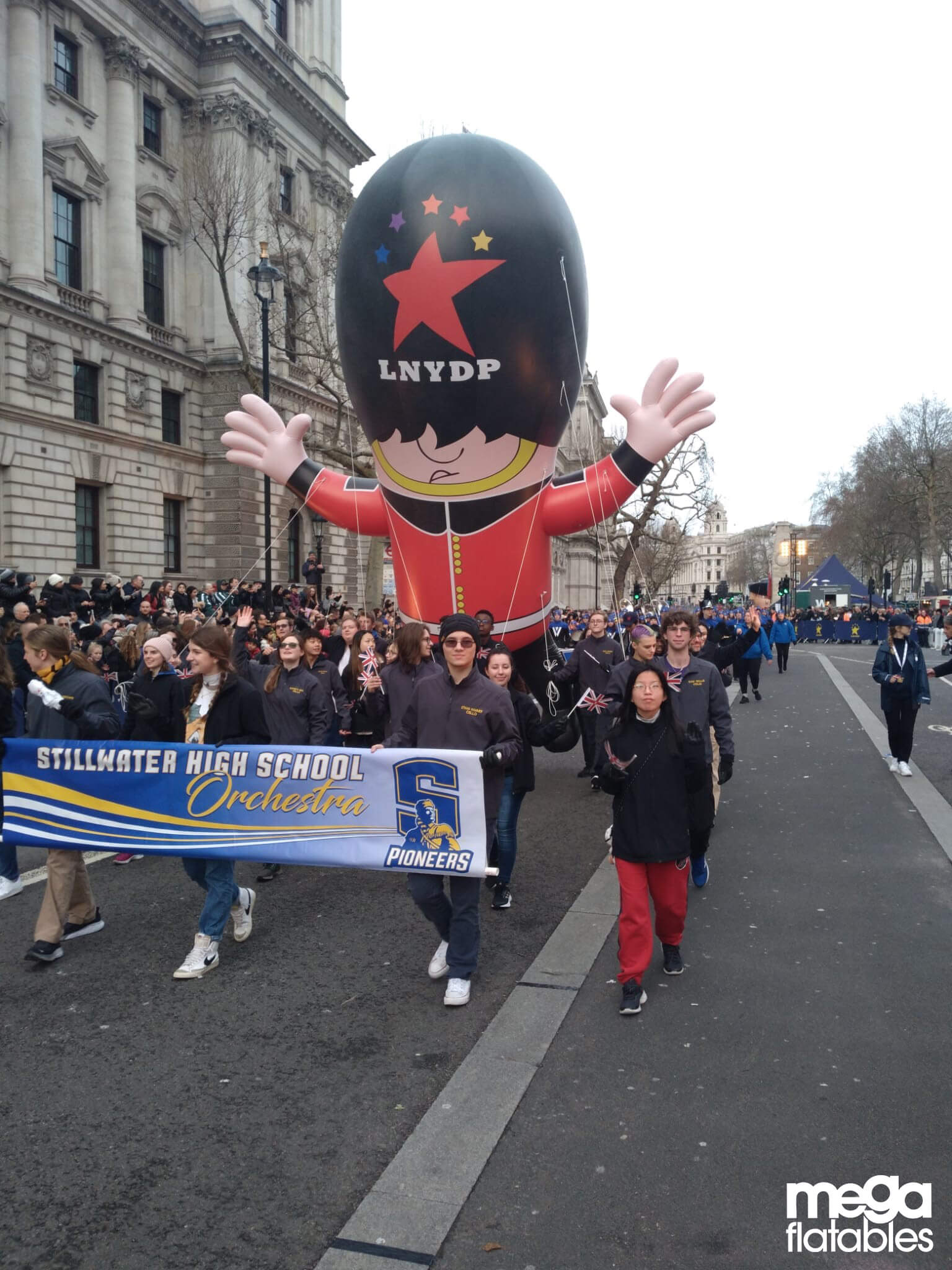
Whether you are organising a council-led celebration, a brand activation, or a charity procession, commissioning a custom parade float is one of the most visually impactful decisions you can make. A well-designed parade inflatable can tower above crowds, command media attention, and leave a lasting impression on tens of thousands of spectators in a single outing.
But if you have never ordered one before, the process can feel unfamiliar. What do you include in a design brief? How far in advance should you start planning? What is the difference between helium and cold air inflatables? This guide on how to commission a custom parade float covers every stage of the commissioning process, from initial concept through to the day your float moves down the route.
When Should You Start Planning a Custom Parade Float?
The single most common mistake first-time buyers make is underestimating the lead time required. A bespoke parade balloon or inflatable float is not an off-the-shelf product. It is manufactured to your exact specification, which means design, prototyping, material sourcing, fabrication, and testing all need to happen before delivery.
How to Write a Custom Parade Float Brief
Your design brief is the foundation of the entire project. A clear, detailed custom parade float brief helps your manufacturer translate your vision into a buildable, parade-safe inflatable. You do not need to be a designer to write one, but you do need to communicate a few critical details.
What to Include in Your Brief
- Character or concept description: What does the float depict? A brand mascot, an animal, a product replica, an abstract shape? Provide reference images, sketches, or mood boards wherever possible.
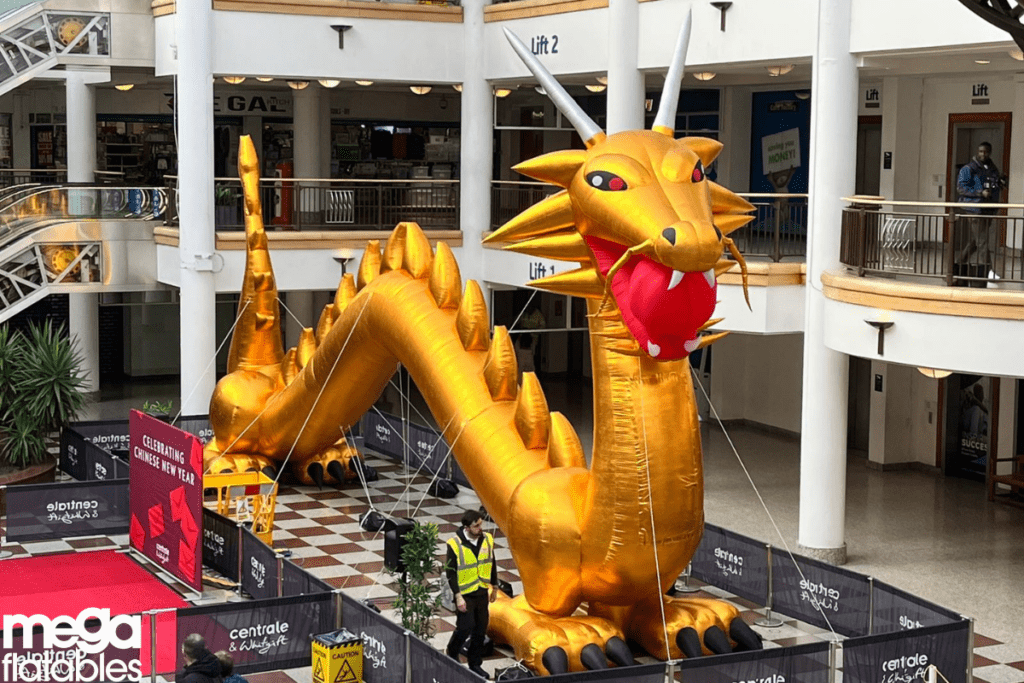
- Dimensions and scale: How tall and wide does the inflatable need to be? Consider overhead obstructions such as power lines, bridges, and tree canopies along your specific parade route. Many UK high streets have clearance restrictions below 6 metres.
- Brand guidelines: If the float represents a brand, supply Pantone colour references, logo files, and any visual identity rules the manufacturer must follow.
- Mobility requirements: Does the float need to be carried by handlers, mounted on a vehicle, or tethered and stationary at a fixed point?
- Inflation type preference: Helium-filled or cold air (fan-powered). More on this below.
- Parade route details: Total distance, road width, gradient changes, and any pinch points or obstacles.
The more information you provide upfront, the fewer revision rounds you will need during the design phase, and the faster your project moves into production.
Helium vs Cold Air Parade Inflatables: Which Should You Choose?
This is one of the first decisions you will need to make when ordering a parade inflatable, and it affects everything from handler numbers to visual impact.
Helium Parade Inflatables
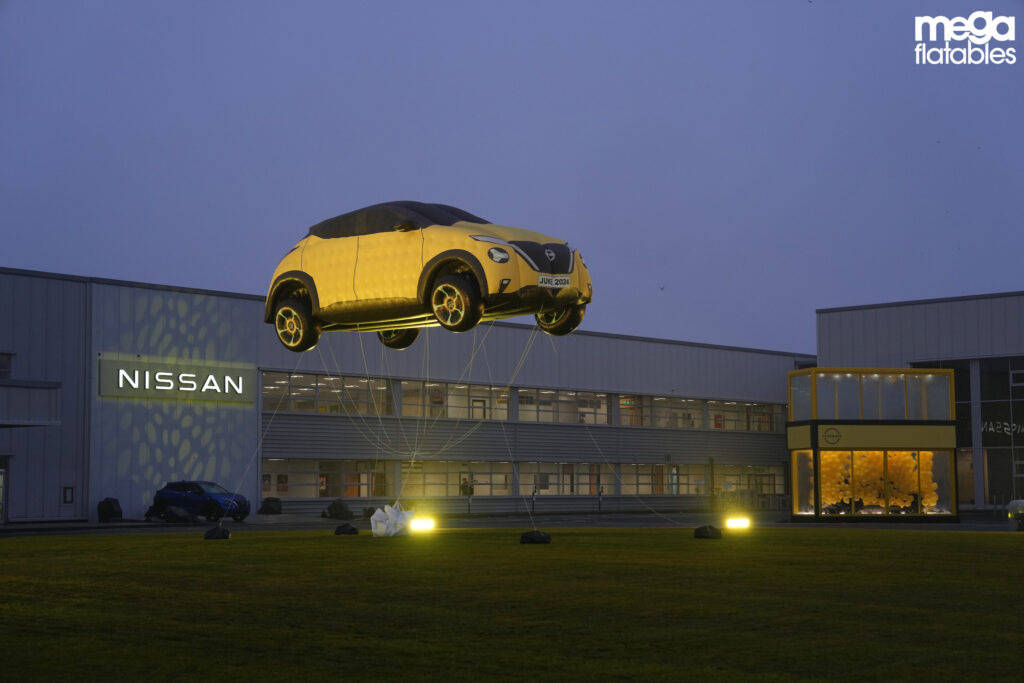
Helium-filled inflatables float above the crowd, tethered to ground-level handlers by a network of ropes. Think of the iconic balloon floats at the Macy’s Thanksgiving Day Parade in New York. These create enormous visual spectacle and are visible from significant distances, making them ideal for large-scale city parades and televised events.
However, helium parade balloons come with additional operational considerations. Wind speed is a critical factor. Most UK parade organisers set a maximum wind speed threshold (typically around 23 mph) beyond which helium floats are grounded for safety.
Cold Air Parade Inflatables
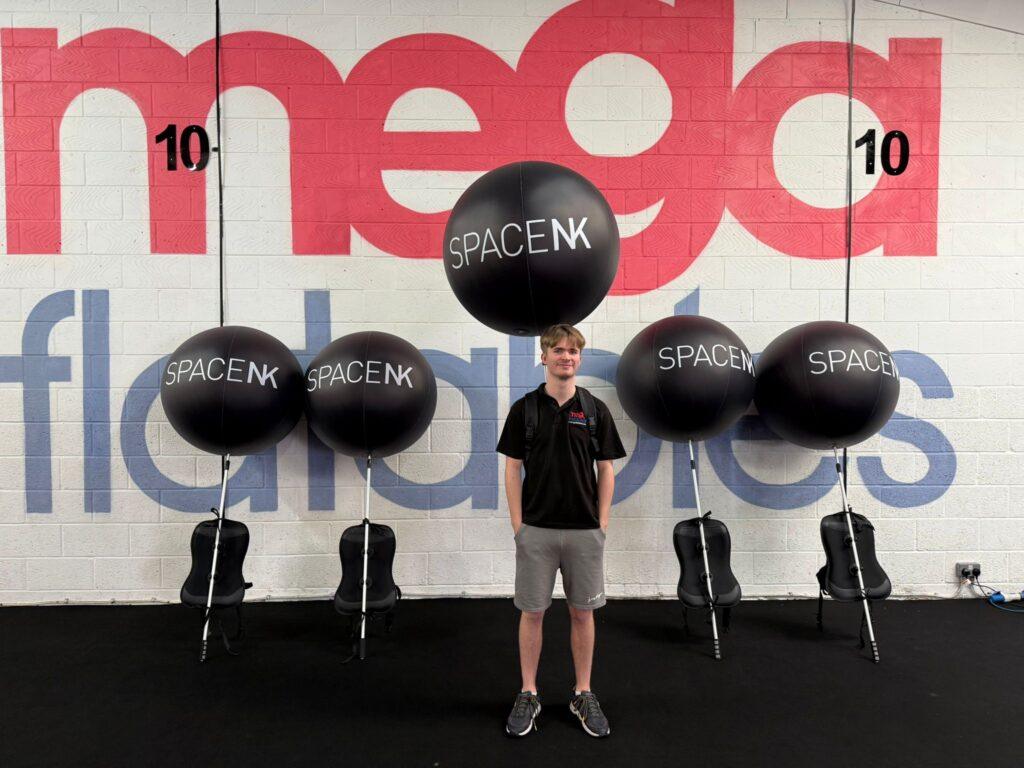
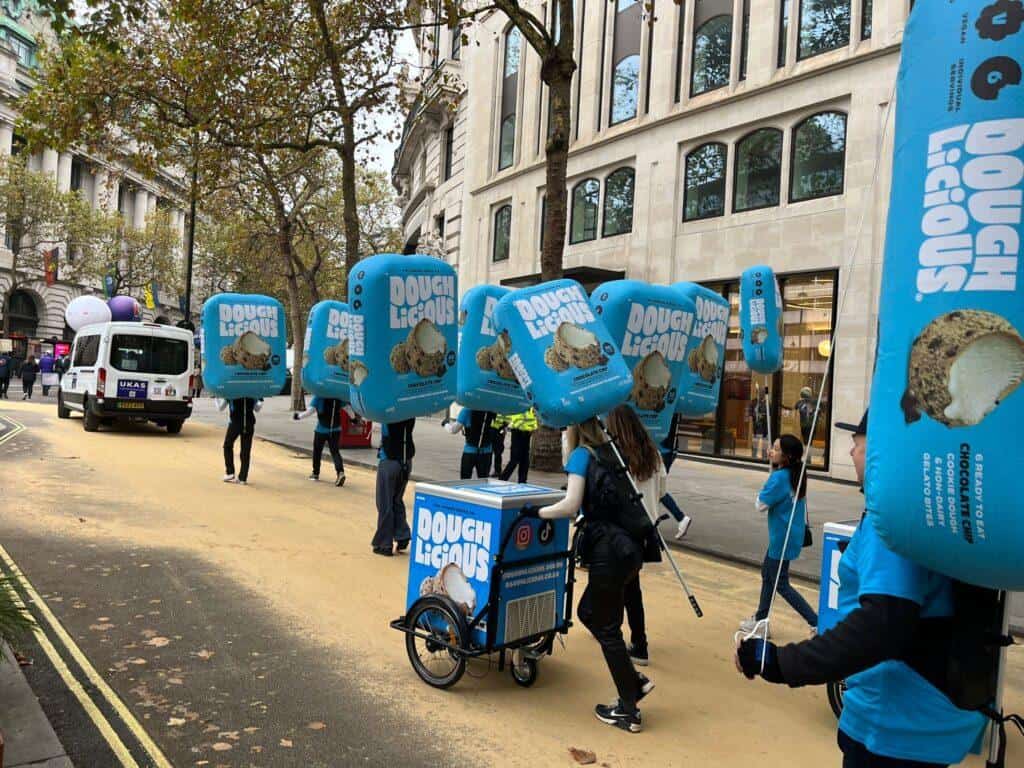
Cold air inflatables use continuous electric fans to maintain their shape. They are typically mounted on wheeled platforms, flatbed vehicles, or carried on lightweight frames by smaller handler teams. Because they are not buoyant, they are less affected by wind (though large surface areas still catch gusts), and they are generally easier to store, transport, and deploy.
A good manufacturer will advise you on the right option based on your specific event, route, and budget. At Megaflatables, we work across both helium and cold air builds and can recommend the best approach during the design consultation.
What Happens During the Design and Manufacturing Process?
Once your brief is submitted, here is what to expect from a reputable inflatable manufacturer at each stage.
Concept and 3D Design
Your manufacturer will produce initial concept artwork and, in most cases, full 3D renders showing the inflatable from multiple angles. This is your opportunity to refine proportions, colours, facial expressions, branding placement, and overall form. Expect two to three rounds of revisions as standard, though this varies by project complexity.
At Megaflatables, we provide photorealistic visualisations, so you can see exactly how your bespoke inflatable will look before a single seam is sewn. These renders are also useful for internal sign-off if you need approval from multiple stakeholders.
Material Selection and Fabrication
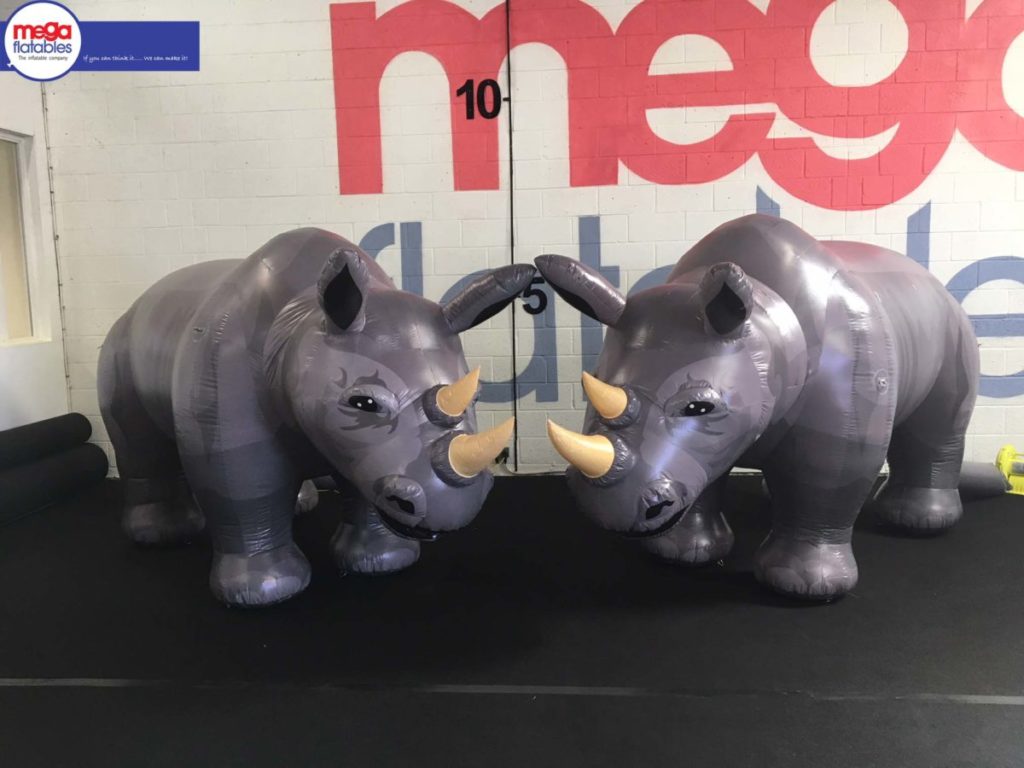
Parade inflatables are constructed from heavy-duty nylon or PVC-coated fabric, selected based on the inflation method, expected lifespan, and environmental exposure. Helium balloons require gas-tight polyurethane or similar barrier fabrics, while cold air inflatables use ripstop nylon with reinforced stress points.
Colours are either digitally printed directly onto the fabric or achieved through dye-sublimation, depending on the complexity of the artwork. For brand-specific builds, Pantone matching ensures colour accuracy that holds up in daylight and under artificial lighting.
Test Inflation and Quality Checks
Before dispatch, any reputable manufacturer will fully inflate the finished product in a controlled environment. This test inflation checks for air leaks, structural integrity, colour accuracy, and overall visual appearance at full scale. You may be invited to attend this stage in person, or you will receive photographs and video for remote sign-off.
Handler Requirements and Safety Planning
No parade inflatable operates itself. Handler planning is a critical part of commissioning a custom parade float, and it is something you should discuss with your manufacturer early in the process.
Handler numbers depend on the size of the inflatable, whether it is helium or cold air, and the complexity of the parade route. A mid-sized cold air inflatable on a wheeled platform might require 4 to 6 handlers. A large helium balloon can need 20 or more, each assigned to a specific tether line with designated roles for steering, braking.
All handlers should receive a pre-parade briefing covering:
- Communication signals between the handler team
- Wind response protocols
- Emergency procedures, including rapid deflation
- Route-specific hazards (overhead wires, narrow sections, crowd barriers)
Many UK parade organisers, including those behind events like the Lord Mayor’s Show in London and the Manchester Day Parade, require handler teams to submit formal risk assessments. Your manufacturer should be able to supply supporting documentation and, in some cases, provide a trained crew as part of a full event management service.
Route Logistics: What Do First-Time Buyers Often Overlook?
Ordering a parade inflatable is only half the challenge. Getting it safely through a public route requires careful logistical planning.
Route Survey
Walk or drive the full parade route before finalising your inflatable dimensions. Measure overhead clearances at every point, noting power lines, traffic lights, pedestrian bridges, tree branches, and shop signage. In the UK, overhead utility cables can hang as low as 5.2 metres on residential streets. Your inflatable, including any upward movement caused by wind or handler bounce, must clear every obstacle with a safe margin.
Inflation and Staging Areas
You will need a flat, sheltered area near the parade start point where the inflatable can be unpacked, inflated, and staged. For helium balloons, this area must be large enough to accommodate the full footprint of the inflatable plus the helium supply equipment. For cold air builds, you need access to mains power or a generator for the fans.
Weather Contingency
The UK weather is famously unreliable. Every parade plan should include a wind and rain contingency. Establish a clear go or no-go decision point (typically two hours before the parade start) and designate who has the authority to make that call. Your manufacturer can advise on the maximum wind speed rating for your specific inflatable.
Storage and Reuse of Parade Inflatables
A well-made bespoke parade balloon in the UK should last for multiple seasons if stored correctly. After the event, the inflatable should be thoroughly dried (to prevent mould and mildew), carefully folded according to the manufacturer’s instructions, and stored in a cool, dry environment away from direct sunlight and rodent access.
Most parade inflatables pack down to a fraction of their inflated size. A 6-metre character, for example, might fold into a bag roughly the size of a large suitcase. Your manufacturer should supply a custom carry bag or flight case and provide written storage instructions with every delivery.
If your inflatable will appear at multiple events across the year, consider scheduling an annual inspection with your manufacturer to check seams, fabric condition, and fan or valve function.
Why Work with an Experienced Parade Inflatable Manufacturer?
Parade inflatables are not standard promotional products. They move through crowded public spaces, interact with unpredictable weather, and need to perform flawlessly under the scrutiny of thousands of spectators and, increasingly, social media cameras. The difference between a memorable parade moment and a logistical headache often comes down to the manufacturer’s experience.
At Megaflatables, we have designed and built parade inflatables for events across the UK and internationally, including large-scale public celebrations and brand-led activations. With over a decade of experience, 300+ five-star Google reviews, and a client list that includes some of the world’s most recognised brands, we offer a genuine end-to-end service from first sketch to parade day.
Our team handles concept design,manufacturing, delivery, on-site inflation, handler briefings, and full event support. If you can think it, we can make it.
Ready to Start Planning Your Parade Float?
If you are an event organiser, council, or brand looking to commission a custom parade float for the first time, the best place to start is this parade float planning guide. Get in touch with the Megaflatables team to start planning your custom parade float. We will walk you through every stage, from initial concept and design briefing through to manufacturing, logistics, and parade day support. No matter how ambitious the idea, we have the experience and capability to bring it to life.
Frequently Asked Questions About Commissioning Parade Floats
How long does it take to make a custom parade float?
Most custom parade inflatables take between 2- 3 weeks from initial enquiry to delivery. Larger or more complex builds may require more time. Starting the process early ensures your project is not affected by peak season demand.
How many handlers do you need for a parade inflatable?
Handler numbers depend on the inflatable type and size.
Can parade inflatables be reused?
Yes. A well-manufactured parade inflatable, stored correctly between events, can last for several years and multiple appearances. Annual inspections help maintain performance and appearance over time.
What happens if it is too windy on parade day?
Each inflatable has a rated maximum wind speed. Helium balloons are more sensitive to wind than cold air builds. A clear weather contingency plan, including a defined go or no-go decision point, should be agreed upon before the event.