
Every touring production and festival stage build starts with the same question: how do we create maximum visual impact while keeping logistics practical? For production managers weighing up festival stage inflatables vs traditional stage sets, the answer is rarely as simple as choosing one material over another. It depends on venue size, touring schedule, creative ambition, crew availability, and environmental targets.
This guide breaks down the practical differences between inflatable stage props vs traditional set build materials like timber, steel, and acrylic. We cover setup times, transport logistics, scalability across venue types, reusability, creative flexibility, and sustainability, giving you the details you need to make an informed production decision.
What Are Inflatable Stage Props and How Are They Used?
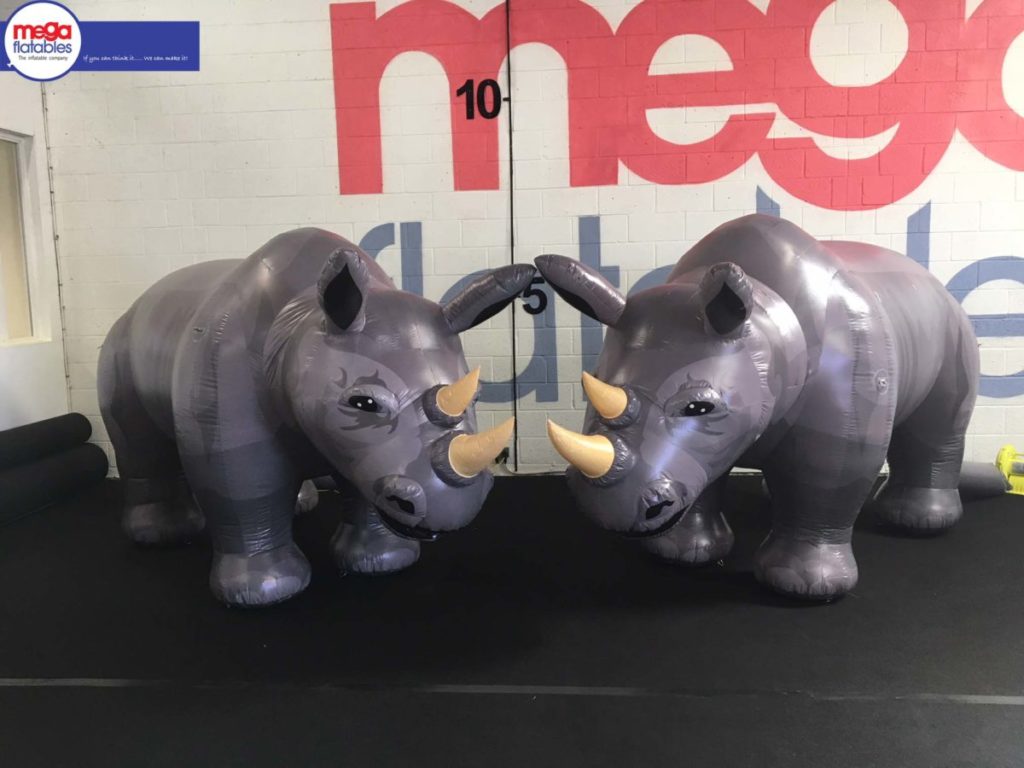
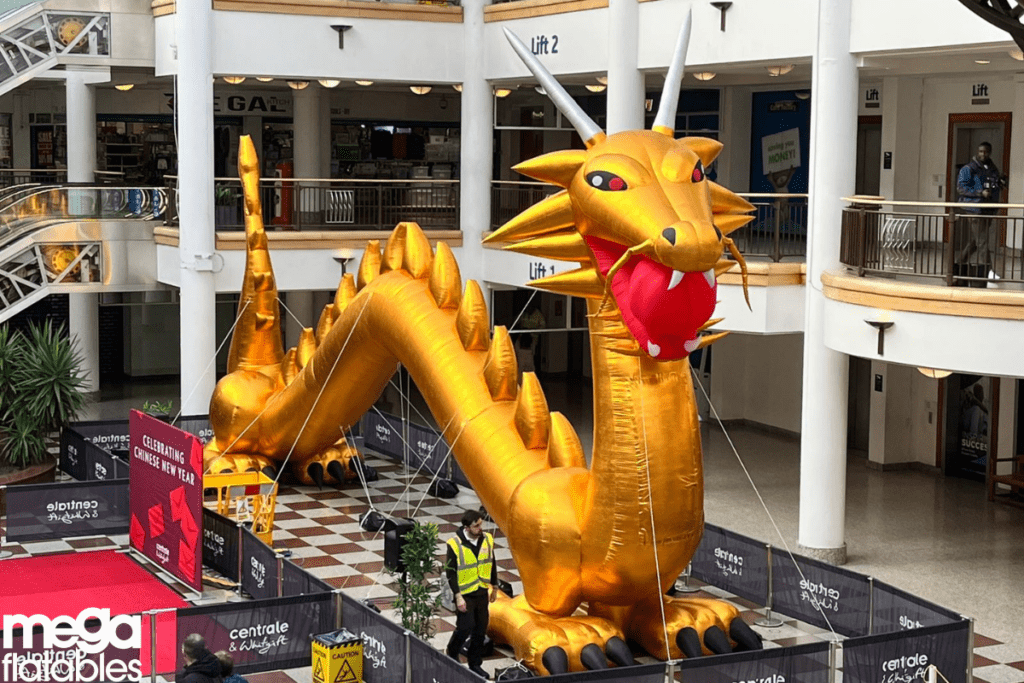
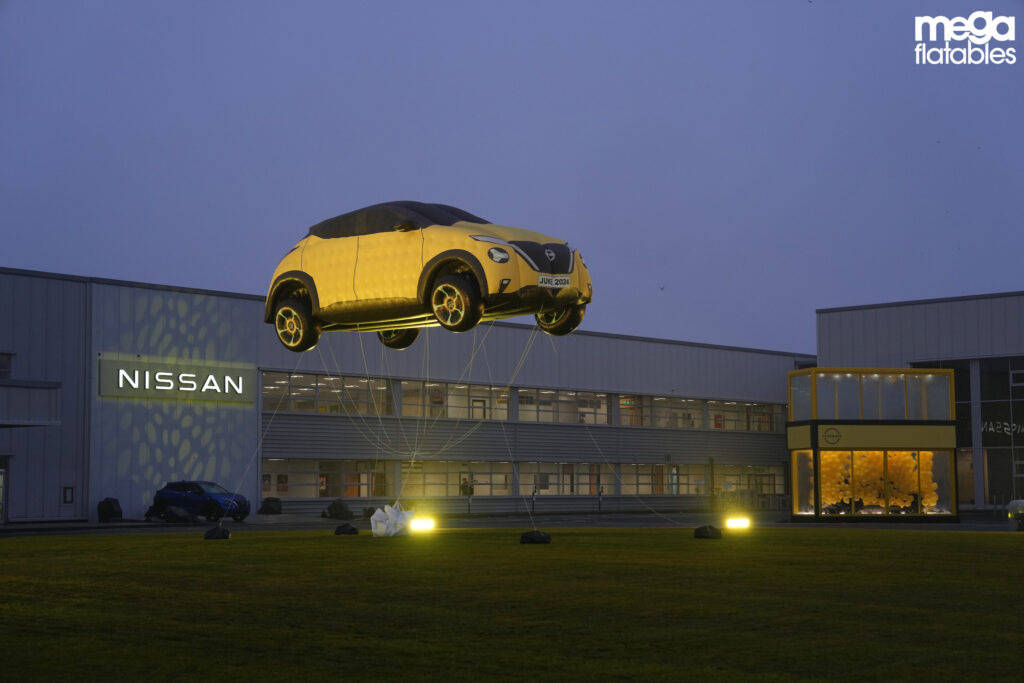
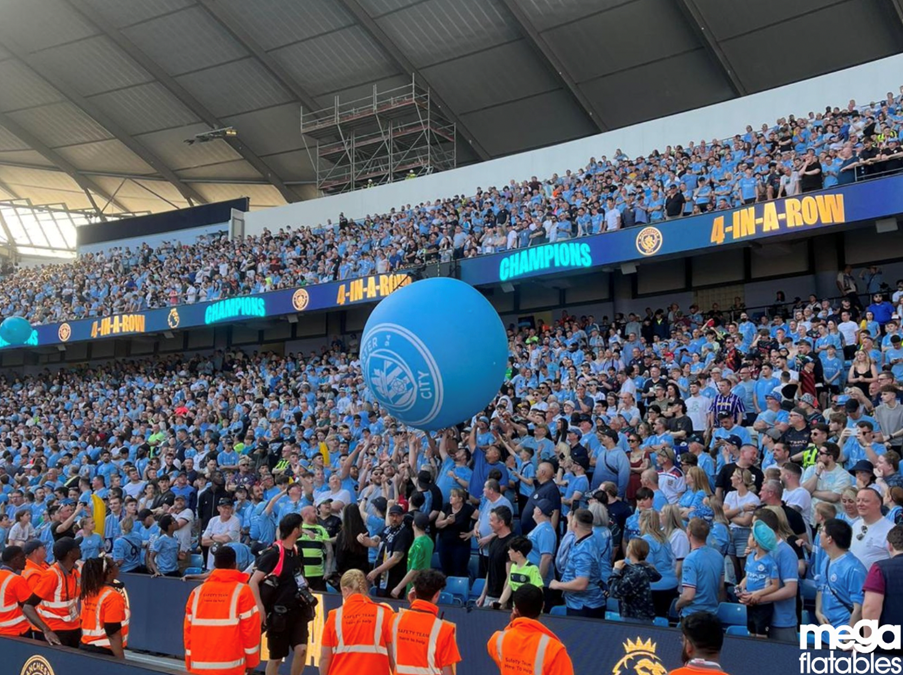
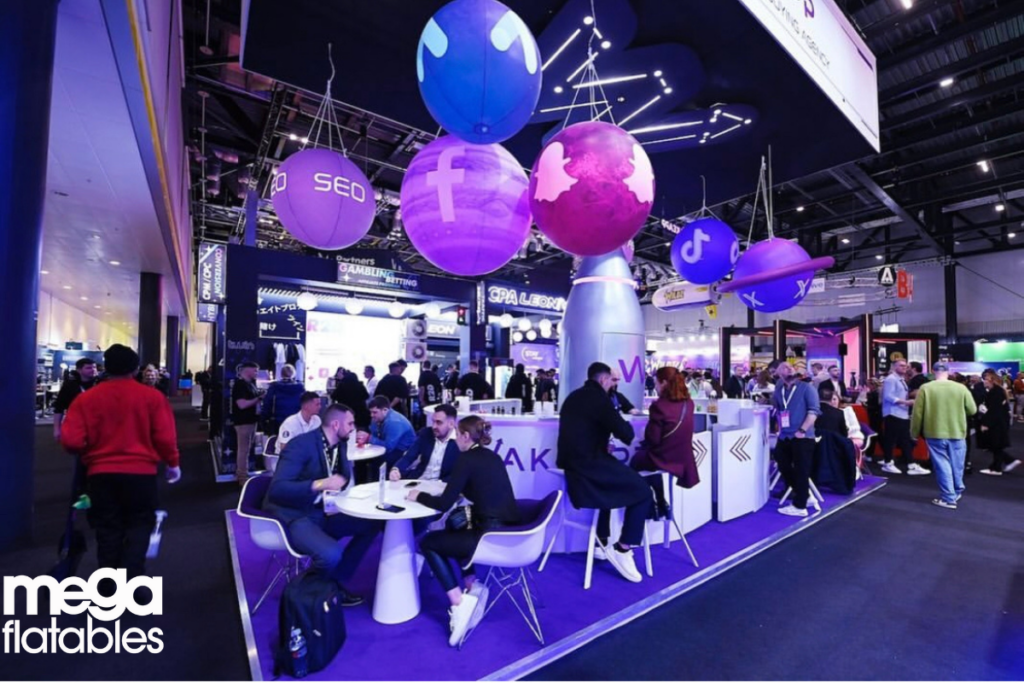
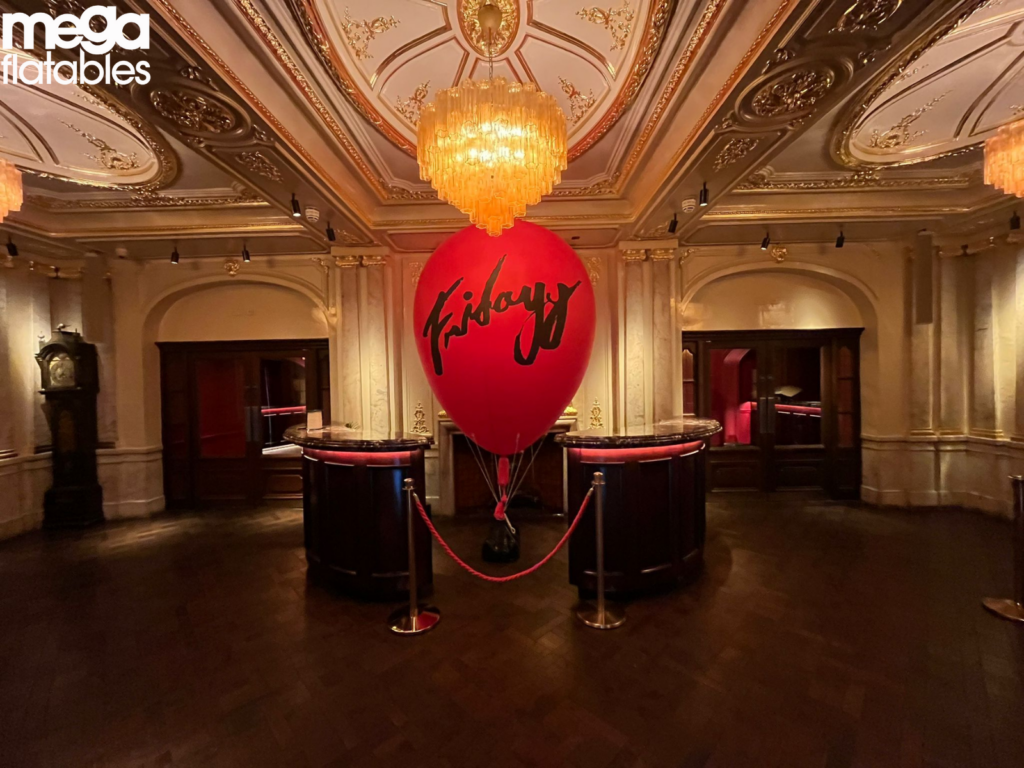
Inflatable stage props are custom-manufactured, air-filled structures made from durable materials such as PVC and ripstop nylon. They are used as backdrops, centrepiece sculptures, branded elements, and immersive scenic pieces on festival stages and touring productions. They can be designed in virtually any shape, from abstract geometric forms and giant characters to precise brand replicas and architectural elements.
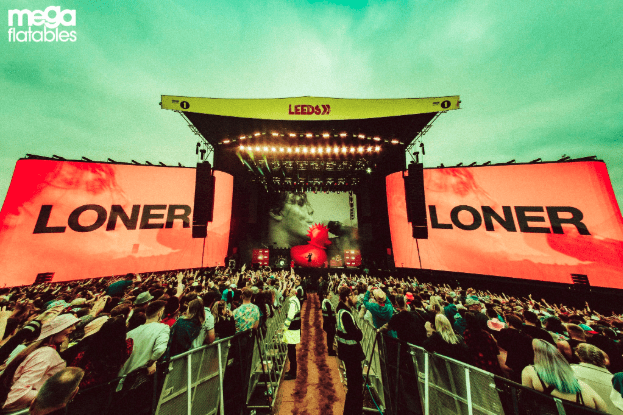
At major festivals and arena tours, inflatables have become a go-to scenic solution for artists and brands who need a large-scale visual presence without the structural complexity of a traditional set build. Acts performing at events like Glastonbury, Download Festival, and Rock in Rio have used bespoke inflatables to fill stages with colour and movement at a fraction of the setup time required for a conventional steel and timber rig.
Megaflatables has designed and manufactured music and stage inflatables for internationally recognised artists and event producers, creating bespoke pieces that travel across multiple dates and venues without the wear, weight, or waste associated with traditional builds.
Setup and Pack-Down Time: Where Do Inflatables Win on the Clock?
One of the most significant operational differences between a touring inflatable and a built set is the time required to get it stage-ready. A full traditional set build using steel truss, timber flats, painted scenic panels, and acrylic features can take anywhere from 8 to 24 hours to rig, depending on complexity. That timeline demands large crews, specialist carpenters, welders, and riggers, plus detailed health and safety sign-off at every stage.
Inflatable stage elements, by comparison, typically inflate in 10 to 45 minutes depending on scale. A 6-metre inflatable character or branded backdrop can go from packed bag to fully inflated and lit in under 30 minutes with a small crew of two to four people. Pack-down is similarly quick: deflation, folding, and bagging can be completed in roughly the same window.
For festival turnarounds where stage changeover windows are tight, sometimes as short as 60 to 90 minutes between headline acts, inflatables offer a practical edge that traditional scenic builds simply cannot match. This speed advantage compounds across a touring schedule. A 20-date tour with a traditional set build might require advance rigging crews travelling a day ahead. An inflatable-based production can often travel with the main crew, reducing staffing requirements and simplifying scheduling.
Touring Logistics: Transport Weight and Volume Compared
A standard festival stage set constructed from steel, timber, and acrylic can fill multiple 40-foot articulated trailers. The steel truss alone accounts for significant weight, and timber scenic flats are bulky and fragile in transit, requiring careful packing and often bespoke flight cases. The total freight weight for a mid-scale traditional stage set can exceed several tonnes.
The same visual footprint achieved with inflatables can often be packed into one or two road cases or holdalls. A 5-metre-tall inflatable sculpture, once deflated, might compress down to the size of a large suitcase. Even a full stage suite of multiple inflatable elements rarely exceeds a single pallet’s worth of cargo space.
This reduction in freight volume and weight has direct implications for touring:
- Fewer vehicles required, reducing convoy size and road logistics complexity
- Lower fuel consumption per show, a measurable reduction in carbon output across a tour
- Simpler international freight, with inflatables easier to ship by air for overseas festival dates
- Reduced storage requirements between tours and during off-season periods
For production managers planning European festival circuits or transatlantic tours, the difference between shipping three trailers of steel and timber versus one flight case of inflatables can reshape an entire production budget and timeline.
Visual Scale at Different Venue Sizes
One common concern when evaluating stage inflatables vs timber set builds is whether inflatables deliver the same visual authority at scale. On a 200-capacity club stage, a detailed timber and acrylic set with integrated lighting can create an intimate, high-production feel. But that same set on a 60-metre-wide outdoor festival stage can look lost, dwarfed by the sheer expanse of open air and distance from the audience.
Inflatables excel in large-format environments precisely because they are designed to fill space. A 10-metre inflatable centrepiece has real physical presence that reads from 100 metres away, something that fine-detail timber carpentry and acrylic fabrication often struggle to achieve at outdoor distances. The smooth, curved surfaces of inflatables also catch stage lighting effectively, creating bold silhouettes and colour washes that translate well to live camera feeds and broadcast.
Conversely, inflatables can be manufactured at smaller scales for theatre and arena settings. Modular designs allow production teams to deploy different configurations depending on venue dimensions, using the same core elements across both a 5,000-seat arena and a 50,000-capacity festival field.
How Do Inflatables Perform in Outdoor Wind and Weather?
A question production managers consistently raise is whether resilience. Modern stage inflatables are engineered for outdoor use. Materials like heavy-duty PVC and reinforced nylon are UV-resistant, waterproof, and rated for sustained wind exposure. Internal blower systems maintain constant air pressure, and inflatables are secured using ballast, ground stakes, or ratchet straps, depending on the surface.
Traditional timber sets, by contrast, require weatherproofing treatments, are vulnerable to warping in rain, and may need additional structural bracing in exposed outdoor locations. Steel is weather-resistant but adds significant rigging time and weight to compensate for wind loading.
Reusability Across a Tour and Beyond
Reusability is where the comparison between inflatable stage props vs traditional set build becomes particularly clear. A timber and acrylic set that tours 30 dates will show wear. Paint chips, panels crack, joints loosen, and scenic elements need ongoing repair by a skilled carpentry team travelling with the production. By the end of a typical tour, significant portions of a traditional set may need rebuilding or replacing entirely.
Quality inflatables, manufactured with heat-welded seams and reinforced stress points, are designed to withstand hundreds of inflation and deflation cycles. At Megaflatables, our stage inflatables are built to endure repeated touring use, with materials selected for abrasion resistance and structural longevity. Minor repairs, such as patching a small puncture, can be carried out on-site in minutes using a standard repair kit.
After a tour concludes, the same inflatable elements can be stored flat in a compact space and redeployed for future runs, festival appearances, or one-off events. This makes them a practical asset rather than a disposable scenic piece. Many of the custom inflatables we produce are used across multiple years and campaigns by the same client.
Creative Flexibility: What Can You Actually Achieve?
Traditional set builds offer fine detail. Intricate carpentry, precision-cut acrylic, integrated LED panels, and mechanical moving parts are all achievable with timber and steel. For productions that rely on small-scale detail visible at close range, such as theatre or TV studio sets, conventional materials remain the standard.
Inflatables, however, offer a different kind of creative freedom. Because they are manufactured from flat pattern pieces that are cut and welded to form three-dimensional shapes, almost any form is achievable. Organic curves, oversized characters, abstract sculptures, branded product replicas at 10x scale, and architectural forms that would be prohibitively heavy or complex in steel are all within reach.
Recent innovations in inflatable manufacturing include:
- Internal LED integration for glow effects and colour-changing illumination
- Projection mapping surfaces using smooth white inflatable skins as screens
- Kinetic movement through variable air pressure and multi-chamber designs
- Full-colour digital printing for photorealistic graphics and branding
- Hybrid builds combining inflatable structures with rigid scenic elements
For festival stage design options, this means production designers can think beyond flat backdrops and angular structures. Megaflatables works with designers and production teams from initial concept, offering bespoke inflatable design services that translate creative visions into manufacturable, tour-ready pieces.
Environmental Impact: Inflatables vs Conventional Set Materials
The live events industry is under growing pressure to reduce its environmental footprint. Organisations like A Greener Festival and Julie’s Bicycle publish guidance that encourages production teams to minimise material waste, reduce transport emissions, and choose reusable scenic solutions.
Traditional set builds generate considerable waste. Timber flats are often single-use, painted with non-recyclable coatings, and disposed of after a tour or festival run. Steel is recyclable but energy-intensive to fabricate, and acrylic is a petroleum-based plastic with limited recycling pathways.
Inflatables present a more favourable profile across several environmental metrics:
- Reduced transport emissions due to lower weight and smaller freight volume
- Extended lifespan with hundreds of uses from a single manufactured piece
- Lower material waste as inflatables are reused rather than rebuilt for each event
- Recyclable materials, with PVC now accepted by specialist recycling facilities in the UK
- Smaller crew carbon footprint, requiring fewer personnel and vehicles on tour
Megaflatables also offers a range of recycled inflatables made from reclaimed materials, supporting production teams who need to meet specific sustainability targets for festival accreditation or corporate ESG reporting.
When Does a Traditional Set Build Still Make Sense?
This is not a one-size-fits-all decision. Traditional set builds remain the right choice in certain contexts:
- Residency shows where the set is built once and stays in place for weeks or months
- TV and film productions requiring close-up detail and rigid structural precision
- Theatre runs in controlled indoor environments with fixed sightlines
- Productions requiring integrated mechanical elements such as revolving stages, flying rigs, or trap doors
For touring productions, outdoor festivals, multi-date brand activations, and any scenario where rapid deployment, transport efficiency, and visual scale are priorities, inflatables increasingly represent the more practical and impactful choice.
Making the Right Decision for Your Next Production
The choice between festival stage inflatables vs traditional stage sets ultimately comes down to your production’s priorities. If you are touring multiple dates with tight changeover windows, crossing international borders, playing outdoor stages, or targeting sustainability benchmarks, inflatable stage props offer measurable advantages in setup speed, transport logistics, visual scale, and environmental impact.
If your production is a fixed installation requiring fine mechanical detail and close-range visual fidelity, traditional materials may be the better fit.
For many modern touring productions, the answer is a hybrid approach: inflatable scenic elements for large-scale visual impact combined with targeted traditional elements for specific functional requirements.
Find out how inflatable stage props could transform your next tour. Megaflatables designs, manufactures, and delivers bespoke stage inflatables for artists, festivals, and production companies across the UK and internationally. From initial concept through to on-site installation, our team handles every stage of the process.